Blog
-
Espionage in the Digital Age

For decades, the image of espionage has been dominated by gadgets and gizmos – think James Bond’s Aston Martin or Q Branch’s ingenious inventions. But the reality of modern espionage is far more complex, and far more reliant on cutting-edge technology than many realize. Today, it’s not just about having the gadgets, but about mastering the tools of the digital age and understanding their inherent vulnerabilities. This article dives into how these technologies are functioning in modern tradecraft, exploring the pros, cons, and real-world cases that demonstrate their impact.
The Digital Arsenal: Core Technologies in Play
Several key technologies are fundamentally reshaping espionage:
- Cyber Warfare & Penetration Testing: Gaining access to networks and systems is paramount. Ethical hackers and skilled penetration testers are employed to identify vulnerabilities and exploit them before adversaries can.
- Artificial Intelligence (AI) & Machine Learning (ML): AI is used for everything from analyzing vast datasets to identifying patterns, predicting behavior, and automating intelligence gathering. ML algorithms can sift through data to identify potential threats, translate languages in real-time, and even create deepfakes for disinformation campaigns.
- Satellite Imagery & Geospatial Intelligence (GEOINT): High-resolution satellite imagery, combined with sophisticated analysis tools, allows agencies to monitor activity, track movements, and assess infrastructure with unprecedented detail.
- Facial Recognition & Biometrics: Identifying individuals, tracking their movements, and accessing secure facilities rely heavily on facial recognition and biometric technologies.
- Quantum Computing (Emerging): While still in its early stages, quantum computing poses both a threat (breaking existing encryption) and an opportunity (developing unbreakable codes).
- 5G & IoT Exploitation: The proliferation of connected devices (IoT) and the speed of 5G networks create both new avenues for surveillance and new vulnerabilities to exploit.
Pros: Amplifying Capabilities & Expanding Reach
- Enhanced Data Collection & Analysis: Technology allows agencies to collect and analyze massive amounts of data, far exceeding human capacity. This leads to more accurate assessments, faster response times, and better-informed decision-making.
- Remote Surveillance & Covert Operations: Drones, satellite imagery, and cyber tools enable remote surveillance and covert operations without risking human lives.
- Improved Communication & Secure Networks: Encryption and secure communication protocols protect sensitive information from interception.
- Predictive Intelligence: AI and ML algorithms can identify potential threats and predict future events, allowing agencies to proactively mitigate risks.
- Increased Efficiency & Reduced Costs: Automation and remote capabilities can streamline operations and reduce the need for expensive manpower.
Cons: New Vulnerabilities & Escalating Risks
- Cybersecurity Threats & Counter-Espionage: As agencies become more reliant on technology, they also become more vulnerable to cyberattacks and counter-espionage efforts.
- Data Privacy Concerns & Ethical Dilemmas: The collection and analysis of personal data raise serious privacy concerns and ethical dilemmas.
- The “Data Deluge” & Information Overload: The sheer volume of data can be overwhelming, making it difficult to identify critical information.
- The Rise of Disinformation & Deepfakes: AI-powered disinformation campaigns and deepfakes pose a significant threat to public trust and national security.
- The Asymmetry of Cyber Warfare: Cyberattacks are relatively inexpensive and easy to launch, creating an asymmetry of power.
Real-World Cases: Technology in Action
- Stuxnet (2010): This sophisticated computer worm, allegedly developed by the US and Israel, targeted Iran’s nuclear program, damaging centrifuges and delaying its progress. It demonstrated the potential of cyber warfare to inflict physical damage.
- The Sony Hack (2014): Attributed to North Korea, this cyberattack targeted Sony Pictures Entertainment, leaking sensitive data and disrupting operations. It highlighted the vulnerability of corporations to cyberattacks.
- The NotPetya Attack (2017): This malware, disguised as ransomware, caused widespread disruption in Ukraine and around the world, targeting critical infrastructure and businesses. It underscored the potential for cyberattacks to have global consequences.
- Pegasus Spyware (Ongoing): Developed by the Israeli company NSO Group, this spyware has been used by governments around the world to target journalists, activists, and political opponents. It raised serious concerns about the misuse of surveillance technology and the erosion of privacy.
- Ukraine Conflict (2022-Present): The ongoing conflict has demonstrated the critical role of cyber warfare in modern conflict. Both sides have engaged in cyberattacks, targeting critical infrastructure, spreading disinformation, and disrupting communications.
The Future of Espionage: Adapting to the Technological Landscape
The future of espionage will be defined by the ability to adapt to the rapidly evolving technological landscape. Agencies must invest in cutting-edge technologies, develop robust cybersecurity defenses, and train personnel to operate in the digital realm. They must also address the ethical challenges posed by these technologies and prioritize data privacy and human rights.
The era of James Bond’s gadgets may not be over, but the focus is shifting. Modern espionage is less about physical tools and more about mastering the digital domain—a constant battle for information, influence, and control in the 21st century.
-
Silence Speaks
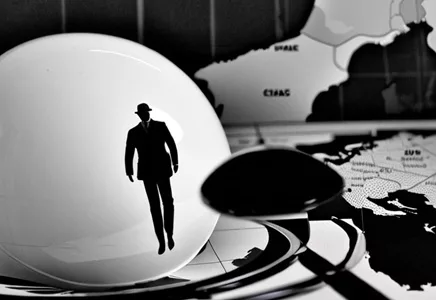
We often associate espionage with dramatic dialogues, coded messages, and elaborate verbal deception. Think of the tense negotiations, the cleverly disguised questions, the urgent whispers in dimly lit rooms. But beneath the surface of all that communication lies a far more potent force: silence. In the shadowy world of intelligence, what isn’t said is often far more revealing – and far more dangerous – than anything that is.
The Power of Omission: What’s Not Being Said?
Communication isn’t just about the words we use; it’s about the information we choose not to share. In espionage, strategic silence becomes a tool – a shield, a weapon, and a means of control.
- Protecting Operations: The most effective operatives are masters of discretion. They reveal only what is absolutely necessary, guarding sensitive information with an impenetrable wall of silence. This isn’t just about avoiding leaks; it’s about controlling the narrative and preventing adversaries from anticipating their moves.
- Eliciting Information: Skilled interrogators understand that forcing a confession isn’t always the best approach. Sometimes, the most valuable intelligence comes from observing body language, detecting hesitation, and noticing what the subject avoids talking about. Silence creates pressure, forcing the target to fill the void – often revealing more than they intend.
- Establishing Dominance: Silence can be a powerful display of control. A seasoned intelligence officer who remains calm and composed, even under pressure, conveys an aura of authority. It suggests they possess information the other party doesn’t, and that they’re not afraid to wait for the truth to emerge.
Real-World Examples: The Weight of Unspoken Truths
- The Cuban Missile Crisis (1962): Throughout the crisis, much of the negotiation between the US and the Soviet Union took place through back channels and coded messages. Crucially, both sides also employed strategic non-communication – deliberately leaving certain issues unaddressed to avoid escalating the conflict. The silences allowed for behind-the-scenes maneuvering and ultimately, a peaceful resolution.
- KGB Tradecraft: The Soviet KGB was renowned for its emphasis on maskirovka – deception and concealment. This wasn’t limited to disinformation; it extended to cultivating an atmosphere of ambiguity and uncertainty. Agents were trained to be deliberately vague, to avoid direct answers, and to maintain a carefully constructed wall of silence.
- Modern Cyber Espionage: The insidious nature of cyber espionage often involves silent intrusions and the theft of data without detection. The lack of visible signs of compromise can be far more damaging than a direct attack, as it allows adversaries to gather intelligence undetected for extended periods.
- The “Grey Man” Philosophy: The concept of the “Grey Man” – blending into the background, being unremarkable, and avoiding attention – relies heavily on non-verbal communication and, crucially, non-interaction. The most effective intelligence operative is the one you don’t notice.
The Art of Observation: Core Principles of Tradecraft
Central to effective espionage isn’t just what you say, but how you gather information—and a crucial element of that is masterful observation. Successful operatives aren’t merely active communicators; they are skilled listeners and careful observers of their surroundings. This demands cultivating a specific skillset, rooted in tradecraft principles. This begins with blending in – becoming a “gray man” – capable of fading into the background and avoiding attention. This requires meticulous attention to detail – observing body language, analyzing patterns of behavior, and detecting subtle inconsistencies. It also necessitates the ability to remain calm and composed under pressure, to control one’s own reactions, and to avoid drawing unnecessary attention. This isn’t passive observation, either; it’s active listening, combined with a practiced ability to read people and assess situations.
The importance of silence within tradecraft extends beyond simply not speaking. It’s about creating space for others to reveal information, both verbally and non-verbally. A skilled operative understands that forcing a confession or interrogation isn’t always the most effective approach. Sometimes, the most valuable intelligence is gleaned from simply listening—allowing the target to fill the silence, revealing their thoughts, motivations, and vulnerabilities. This demands patience, discipline, and a keen understanding of human psychology.
The Rise of Technology and the Enduring Need for Tradecraft
While the tools of espionage have evolved dramatically in the digital age, the core principles of tradecraft remain remarkably consistent. Modern technology – surveillance equipment, data analytics, and social media – has expanded the scope of intelligence gathering, but it hasn’t replaced the need for human intelligence. In fact, it has made it more critical. The sheer volume of data available requires skilled analysts to filter out the noise, identify patterns, and assess the credibility of sources. Moreover, the increasing sophistication of cyberattacks and digital countermeasures demands a deeper understanding of human behavior and social engineering. While digital tools can provide valuable insights, they are ultimately reliant on the ability to understand and interpret human actions. The best intelligence operatives are those who can seamlessly integrate technology with traditional tradecraft techniques—combining digital analysis with human observation and interpersonal skills.
Silence in Fiction: Building Tension and Suspense
Espionage fiction thrives on ambiguity and suspense, and silence is a crucial tool for creating both:
- The Lingering Look: A character’s refusal to meet another’s gaze, a prolonged pause before answering a question, or a fleeting expression of discomfort can speak volumes. These non-verbal cues create tension and hint at hidden motives.
- The Unanswered Phone Call: A ringing phone that goes unanswered, a missed connection, or a deliberately ignored message can instantly raise red flags and fuel the reader’s curiosity.
- The Empty Room: A carefully described empty room – stripped of personal belongings, meticulously clean, or eerily silent – can create a sense of foreboding and suggest that something sinister has transpired.
What are your thoughts? Have you noticed examples of this in your favorite books or movies? Let me know in the comments below!
-
The Art of Uncertainty

We often picture espionage as a frantic race to find information. Think James Bond, meticulously gathering intelligence, cracking codes, and exposing villains. But while uncovering secrets is a part of it, that’s often a symptom, not the goal. The true art of espionage isn’t about what you discover; it’s about what you make others believe. It’s about subtly shifting perceptions, sowing discord, and planting seeds of doubt. In essence, it’s a campaign of psychological warfare.
The Illusion of Control: Why Doubt Is More Powerful Than Truth
Let’s be honest: definitive ‘truth’ is often surprisingly fragile. It relies on trust in sources, consistent narratives, and a shared understanding of events. Espionage rarely aims to replace that truth entirely. Instead, it aims to erode that trust, introduce conflicting information, and create uncertainty. A little doubt can be far more debilitating than a clearly stated accusation.
- Paralyzing Indecision: If you can make an enemy question their own intelligence, their allies’ motives, and even the reliability of their own senses, you’ve effectively paralyzed them. They’ll hesitate, overthink, and second-guess every decision, creating opportunities for you to exploit.
- Internal Conflict: Doubt breeds internal conflict. When leaders are unsure about their teams, or factions within an organization start to distrust each other, it weakens the entire structure. This internal fracturing is often more valuable than any stolen document.
- Shifting the Narrative: A successful disinformation campaign doesn’t need to convince everyone of a new truth. It simply needs to muddy the waters enough that the original truth is lost in the confusion.
Historical Examples: Seeds of Doubt in Action
- The Trojan Horse: Perhaps the most famous example. It wasn’t about discovering Troy’s defenses; it was about planting the seed of belief that the horse was a peace offering, a gift, something harmless. This single belief led to the city’s downfall.
- Operation Mincemeat (WWII): This brilliant British deception involved floating a corpse, dressed as a British officer, carrying false documents off the coast of Spain. The goal wasn’t to reveal Allied invasion plans; it was to convince the Germans that the Allies were planning to invade Greece, diverting valuable resources away from Sicily. They didn’t prove a false narrative, they manufactured belief in one.
- The “Lavender Scare” (Cold War): While based on prejudice, the campaign to portray homosexuals as security risks wasn’t about discovering actual homosexual spies. It was about creating doubt and suspicion within government agencies, fostering a climate of paranoia and enabling witch hunts. It weaponized prejudice to destabilize.
- Russian Disinformation Campaigns (Recent History): The modern age of information warfare demonstrates this perfectly. Russian interference in elections isn’t about “proving” a candidate is bad, but about sowing discord and undermining faith in democratic processes. The goal isn’t to make people believe a specific lie, but to make them doubt everything they read and hear.
From Fiction to Reality: How Espionage Tropes Reflect this Truth
Think about your favorite espionage novels and films. How often is the climax about a grand reveal of facts? More often, it’s about manipulating perceptions:
- The Double Agent: The power of a double agent isn’t in the information they steal. It’s in the doubt they create. Who can be trusted? Are the messages authentic? This sows chaos and hinders effective decision-making.
- The False Flag Operation: Designed to make an action appear to be committed by someone else, it doesn’t necessarily need to be believed by everyone. It only needs to create enough doubt and confusion to achieve the desired outcome.
- The Manipulative Mastermind: Characters like Hans Landa in Inglourious Basterds don’t rely solely on brute force or intelligence gathering. They excel at understanding people’s vulnerabilities and using that knowledge to subtly manipulate their perceptions and actions. He creates situations where his opponents compromise themselves.
Why Planting Seeds of Doubt Is More Effective Than Finding Facts
- Facts are Debatable: Information can be refuted, analyzed, and countered. But doubt is a feeling, an internal state. It’s far harder to combat.
- Doubt is Self-Sustaining: Once planted, doubt can grow and fester, even without further input. It can lead to suspicion, paranoia, and ultimately, inaction.
- It’s Easier to Disrupt Than to Rebuild: It takes immense effort to build trust and establish a clear understanding. It’s far easier to undermine that foundation with a carefully crafted campaign of doubt.
How This Impacts My Writing (and How It Can Impact Yours)
As an author of espionage fiction, this concept profoundly influences my approach to crafting stories. I’m less interested in elaborate heists and code-breaking sequences (though those can be fun!), and more interested in the psychological battleground.
- Focus on Motivation: My characters don’t just want information; they want to control the narrative. Their actions are often geared towards sowing discord and manipulating perceptions.
- Ambiguity and Uncertainty: I embrace ambiguity. I want readers to question what they’re being told, to wonder about the true motives of my characters, and to experience the same sense of uncertainty as the characters themselves.
- Subtle Manipulation: The most effective espionage, both in life and in fiction, is rarely overt. It’s about subtle cues, carefully crafted messages, and exploiting existing vulnerabilities. I try to reflect that in my writing.
- The Power of Perspective: I frequently shift perspectives to demonstrate how easily information can be misinterpreted or manipulated depending on who’s seeing it.
Final Thoughts:
Espionage isn’t just a game of secrets; it’s a psychological art form. The true masters of espionage aren’t the ones who gather the most information; they’re the ones who can most effectively plant seeds of doubt, erode trust, and manipulate perceptions. It’s about understanding the fragility of belief and exploiting it to achieve your goals.
Question:
What’s a time you’ve seen this tactic used in real life or in fiction? Please leave a comment.